

A business owner usually asks this question at the point where the stakes are already real. The site is no longer just a brochure. It needs to generate leads, support sales, rank well, load fast, and give your team room to grow. That is why the custom website vs WordPress debate matters – because the wrong choice can cost you time, budget, and momentum.
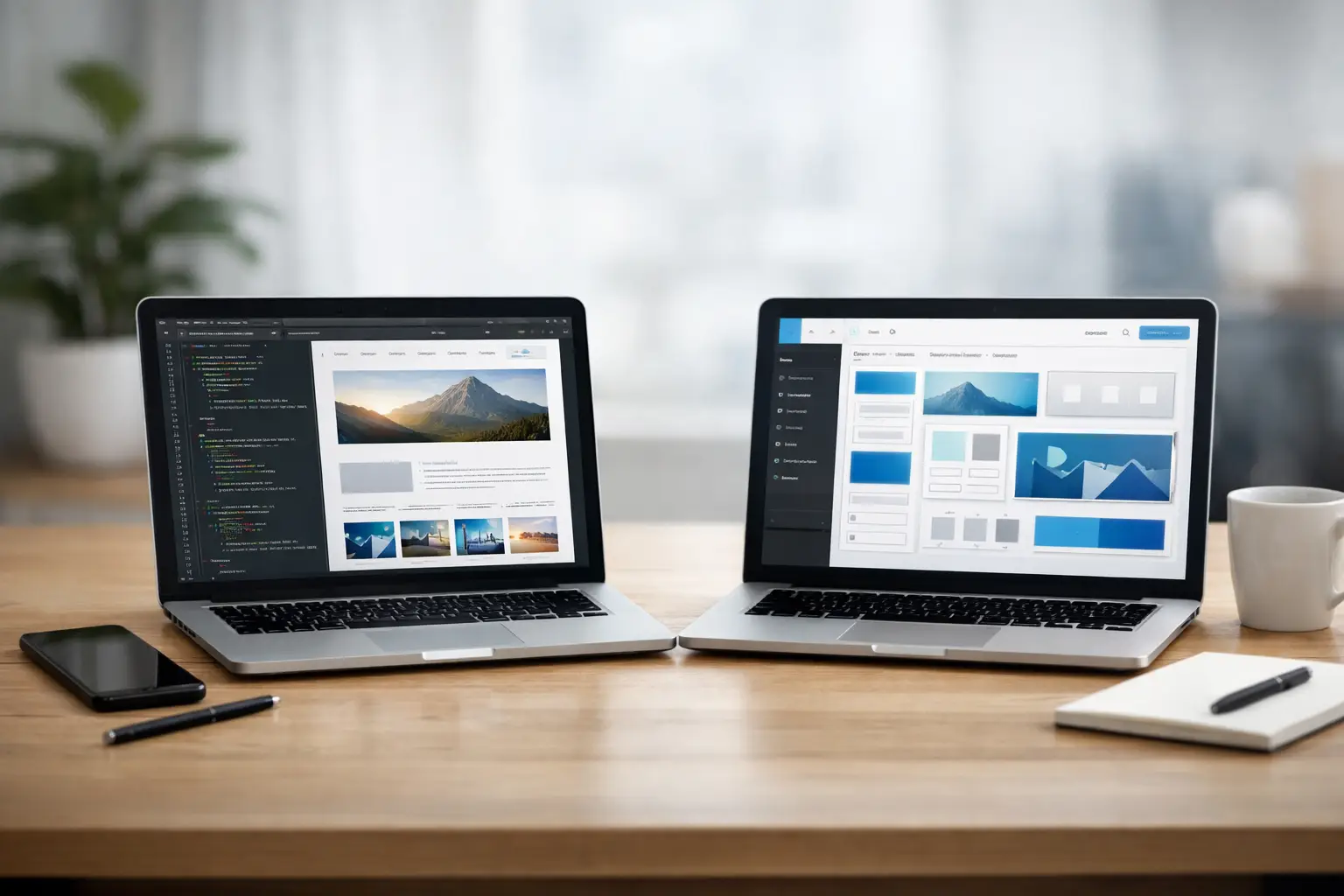
The short answer is simple. Neither option is automatically better. The right decision depends on your business model, growth plans, internal resources, and how much flexibility you truly need. If you are choosing based on price alone, you may save money upfront and lose far more later in redesigns, performance issues, or limitations.
Custom website vs WordPress: the real difference
A WordPress website is built on a widely used content management system. It gives businesses a faster path to launch, easier content updates, and access to a large ecosystem of themes, plugins, and developers to hire. For many companies, that makes it a practical and commercially sensible option.
A custom website is built specifically for your business requirements. That does not just mean a unique design. It usually means custom functionality, tailored code architecture, specific workflows, and a more controlled approach to performance and scalability.
This is where many business owners get confused. WordPress can also be customized. A good WordPress development team can build highly tailored WordPress solutions that go far beyond basic templates.
So the real comparison is not template site versus custom site. It is platform-based flexibility versus fully bespoke development.

When WordPress makes strong business sense
WordPress is often the right choice for SMEs, service businesses, growing brands, and content-driven websites. If your business needs a professional online presence with strong marketing capability, WordPress can deliver that without the longer timelines and higher cost of a fully custom build.
It works especially well when your priorities are speed to market, manageable development costs, and ease of administration. Your team can publish blogs, update pages, add landing pages, and make routine changes without relying on developers for every edit.
From a growth perspective, WordPress is also a strong fit when your website needs to support SEO, lead generation forms, campaign pages, and integrations with common business tools. A properly built WordPress website can absolutely perform at a high level. The problem is not WordPress itself. The problem is poor planning, bloated themes, excessive plugins, and weak technical execution.
That is an important distinction. Many underperforming WordPress sites are not failing because of the platform. They are failing because they were built with short-term thinking.
WordPress is a smart choice if:
- You need to launch relatively quickly
- Your site requires regular content updates
- You want lower initial development costs
- Your marketing team needs flexibility
- Your functionality needs are standard or moderately complex
For many businesses, that combination is more than enough.

When a custom website is the better investment
A custom website becomes more attractive when your business has specific operational requirements that standard platforms do not handle well. This could include advanced user portals, custom databases, unique workflows, complex integrations, or highly specialized customer experiences.
If your site is central to your operation rather than just your marketing, custom development may be the stronger long-term move. In these cases, forcing everything into WordPress can create technical debt. You may spend more time working around platform limitations than solving actual business problems.
Custom development also makes sense when performance, security control, and architecture are top priorities. With a fully bespoke build, your development team has more control over what gets built, how it performs, and how it scales.
That said, custom websites are not automatically more successful. They demand clearer planning, stronger technical oversight, and a bigger budget. If the requirements are vague, a custom project can easily become expensive without producing better business results.
Cost: upfront savings versus long-term value
Cost is usually the first deciding factor, and understandably so. WordPress generally costs less to build initially. Development is faster, the ecosystem is mature, and many standard features can be implemented efficiently.
A custom website typically requires more discovery, more design time, more development hours, and more testing. In other words, custom website design requires an initial investment. For some businesses, that higher cost is justified because the website supports revenue operations at a deeper level.
The bigger question is not what costs less today. It is what creates fewer limitations over the next two to three years.
A lower-cost WordPress development can become expensive if it needs repeated fixes, plugin conflict resolution, speed optimization, and redesign work because it was not structured properly from the start. On the other hand, a custom website can become poor value if the business never uses the advanced capability it paid for.
The most commercially sound choice is the one that fits your actual business needs, not the one that sounds more impressive.
Performance and SEO are not platform decisions alone
Some business owners assume custom websites always perform better in search or load faster. That is not guaranteed.
A well-developed WordPress site can deliver excellent page speed, clean structure, strong indexing, and solid conversion performance. A badly built custom website can do the opposite. Platform matters, but execution matters more. Therefore, it’s crucial to hire a professional & experienced website designer to build your website.
SEO success depends on factors such as site architecture, content quality, page speed, mobile usability, metadata control, internal structure, and user experience. WordPress supports these areas very well when built correctly. It gives marketing teams strong control over content and optimization, which is one reason it remains a practical choice for growth-focused companies.
Custom builds can offer advantages when there are very specific performance requirements or technical constraints.
But if your goal is simply to rank, generate leads, and run campaigns effectively, WordPress is often more than capable.
Maintenance, control, and internal resources
This is where the custom website vs WordPress decision often becomes clearer.
WordPress is easier for most businesses to manage internally. Your staff can update content, add pages, publish articles, and handle many day-to-day tasks without technical intervention. That reduces bottlenecks and helps marketing move faster.
Custom websites usually require more developer involvement for changes, especially if the admin environment is limited or the system was built without operational convenience in mind. That can be acceptable for larger organizations with dedicated support, but it can slow down smaller teams.
Maintenance should also be looked at honestly. WordPress needs regular updates, plugin checks, and security monitoring. A custom website needs its own form of technical upkeep, too. Bespoke does not mean maintenance-free. It simply means the maintenance requirements are different.
A dependable website partner matters in both cases. Technology decisions are only as strong as the support behind them.
 Scalability: think beyond launch day
Many websites are chosen for launch, not for growth. That is a mistake.
If you expect to expand services, run more campaigns, add user features, integrate more systems, or support multiple business functions, your website should be planned with scale in mind. WordPress can scale very effectively for many business use cases, especially when the build is lean, strategic, and not overloaded with unnecessary tools.
Custom development becomes more relevant when scaling involves highly specialized functionality or operational complexity. If your future roadmap includes advanced digital products or tailored workflows, custom architecture may offer a better foundation.
The key is forecasting realistically. Not every business needs enterprise-level complexity. But every business does need a platform that will not hold back growth.
How to choose the right option for your business
If your website is primarily a marketing and lead generation asset, WordPress is often the most efficient and commercially practical choice. It gives you flexibility, speed, content control, and room to grow without overcommitting your budget.
If your website is deeply tied to custom operations, unique customer journeys, or advanced technical requirements, a custom website may be the better long-term investment.
A few questions help make the decision clearer:
- Will your team need to update content often?
- Are your required features standard, moderately custom, or highly specialized?
- Do you need to launch quickly, or are you solving for a larger long-term system?
- What matters more right now: lower upfront cost or maximum architectural control?
- Do you have the internal capacity to manage a more complex platform?
These are business questions first and technical questions second.
A good website should not just look credible. It should support sales, improve user experience, and make your digital strategy easier to execute. If WordPress can do that, use it with confidence. If your business genuinely needs custom development, invest with clarity. The better choice is the one that helps you grow without creating unnecessary friction.