


Most businesses do not have a Facebook ads problem. They have a lead quality problem.
That distinction matters. Facebook ads for lead generation can fill your pipeline quickly, but volume alone does not create revenue. If the targeting is broad, the offer is weak, or the follow-up is slow, the campaign may look busy while the sales team chases the wrong people.
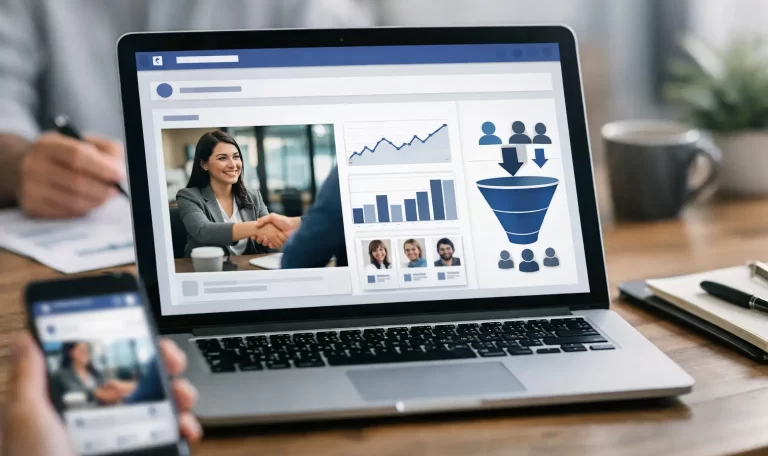
The real goal is not just more leads. It is more qualified conversations at a cost your business can sustain.
Why Facebook ads for lead generation still work
Facebook remains one of the most effective paid channels for reaching prospects before they start actively comparing vendors. That makes it especially useful for businesses selling services, higher-value products, consultations, demos, or any offer that needs a sales conversation before conversion.
The strength of the platform is not just reach. It is the ability to combine audience targeting, creative testing, and lead capture in one environment. You can reach business owners, homeowners, parents, decision-makers, or niche interest groups and present a relevant offer based on what they are likely to care about.
That said, Facebook is not magic. If your offer has low perceived value or your landing experience creates friction, the platform will expose those weaknesses quickly. Good campaigns depend on business fundamentals as much as ad setup.
Start with the right lead generation objective
One of the most common mistakes is launching ads before defining what counts as a lead. For some businesses, a lead is a form submission. For others, it is a booked call, a WhatsApp inquiry, or a request for a quote. The closer your campaign objective aligns with actual sales intent, the better your results tend to be.
If your sales cycle is short & straightforward, instant forms inside Facebook can work well. They reduce friction and often lower the cost per lead.
If your service requires more explanation or qualification, sending traffic to a focused landing page may produce fewer leads but better ones.
There is always a trade-off here. Instant forms usually win on convenience. Landing pages often win on intent. The right choice depends on how much information a prospect needs before taking action.
When instant forms make sense
Instant forms are useful when speed matters and the offer is easy to understand. This is common in industries such as insurance, education, real estate, events, and local services. The user stays inside the app, the form auto-fills some information, and conversion rates are often strong.
The downside is that lower friction can also attract weaker leads. People may submit without fully understanding your service or without real urgency.
When landing pages perform better
Landing pages are often a better fit when you need to educate, pre-qualify, or build trust. A well-structured page can explain your offer, show proof, answer objections, and filter out low-intent traffic before the form is submitted.
This usually improves lead quality, though your cost per lead may rise. In many cases, that is a worthwhile trade if your close rate improves.
The offer determines the outcome
Businesses often focus too much on ad design and too little on the offer itself. People do not submit forms because an ad looks polished. They submit because the value is clear and the next step feels worthwhile.
A strong lead generation offer is specific, relevant, and easy to understand. “Book a consultation” may work if your market already knows your brand. For colder audiences, something more concrete often performs better, such as a site audit, pricing discussion, strategy session, product demo, or tailored proposal.
Avoid vague messaging. If the prospect cannot tell what they get, who it is for, and why it matters in a few seconds, performance will suffer.
Good offers usually answer three questions fast:
- What is being offered?
- Who is it for?
- Why should they act now?
Clarity outperforms cleverness in paid campaigns.
Targeting better lead quality
Audience targeting can make or break Facebook ads for lead generation. A broad audience is not always wrong, but broad without direction usually wastes budget.
Start with the people most likely to buy. That may include existing customer profiles, website visitors, people who engaged with your brand, or lookalike audiences based on actual conversions. Interest targeting can still work, but it should be approached carefully and tested against broader audience sets.
The biggest mistake is assuming that more targeting layers always improve results. Sometimes they restrict delivery too much and drive up costs. Other times they focus on people who match an interest category but have little buying intent.
For B2B campaigns, this gets even more nuanced. Facebook is not a strict intent platform, so your messaging must do more of the filtering. The ad should call out the right audience directly and make the business relevance obvious.
Use exclusion strategically
Exclusions are often overlooked. If you already have a customer list, recent leads, or internal audiences that should not see acquisition ads, exclude them. This reduces wasted spend and keeps reporting cleaner.
It also helps if you separate cold, warm, and retargeting audiences. Each group needs different messaging and usually delivers different economics.
Creative and copy that move people to act
The ad has one job. It needs to stop the scroll long enough for the right person to care.
That does not mean flashy design. In many cases, simple creative with a clear headline and direct value proposition performs better than heavily produced visuals. The message should connect to a specific business problem, show a practical outcome, and make the next step feel low risk.
For service-based businesses, the strongest angles usually focus on one of these:
- Saving time
- Reducing waste
- Increasing revenue
- Fixing a known operational issue
- Improving results with expert support
The copy should sound like a business conversation, not a slogan. Strong ads are direct. They speak to the pain point, present the offer, and set expectations clearly.
What happens after the lead matters just as much
Many campaigns underperform not because the ad failed, but because the follow-up failed.
Lead generation is not complete when the form is submitted. It is complete when your team responds quickly, qualifies properly, and moves the prospect to the next step. If replies take hours or days, lead quality will appear worse than it really is. Speed matters. So does consistency.
A practical lead process usually includes immediate confirmation, clear ownership within the sales team, and a structured follow-up sequence. Businesses that treat lead response as part of campaign strategy almost always outperform those that treat it as an afterthought.
This is where a results-driven digital strategy becomes more than media buying. Ads, landing pages, CRM handling, and sales operations need to work together.
How to measure success beyond cost per lead
Cost per lead is useful, but it is incomplete. A cheaper lead is not better if it never becomes a customer.
The better way to evaluate performance is to look at cost per qualified lead, appointment rate, close rate, and return on ad spend, where applicable. If your Facebook campaign generates leads at a higher initial cost but doubles the quality, it may be the better investment.
Tracking should reflect your actual sales model. If your business closes deals over weeks or months, short-term metrics can be misleading. In that case, you need a feedback loop between advertising and sales so the platform can be optimized around better signals over time.
Common reasons Facebook lead campaigns fail
Most failed campaigns share a few patterns. The targeting is too loose, the offer is generic, the form asks for too much or too little, the landing page lacks trust signals, or the business responds too slowly.
Sometimes the issue is an expectation mismatch. Businesses want premium leads on a low budget in a highly competitive market. That is possible in some cases, but not consistently. Budget, audience size, sales cycle, and offer strength all shape the outcome.
It also depends on the maturity of your business. If you have no clear customer profile, no proven sales message, and no system to handle inquiries, Facebook will not solve those gaps on its own. It will amplify them.
Building a campaign that scales
A scalable lead generation campaign is rarely built in one round. It comes from testing. You test audiences, offers, headlines, form structure, landing pages, and follow-up timing. Then you make decisions based on actual performance, not assumptions.
This is where experienced execution matters. Scaling too early can destroy efficiency. Changing too many variables at once can make reporting useless. Good campaign management is methodical. It protects the budget while pushing for better results.
Facebook ads for lead generation can absolutely deliver strong commercial results. But the winners are usually not the businesses with the loudest ads. They are the ones with the clearest offer, the strongest process, and the discipline to optimize what happens before and after the click.
If your current campaigns are generating activity without enough real sales conversations, that is not a reason to abandon the channel. It is a reason to fix the strategy behind it.